Inefficient Structures.
Optimizing inefficiencies of the AEC industry and how technology is one solution.
Published: April 15, 2026 at 11:47 AM
Updated: April 15, 2026 at 11:47 AM
Created by VAES team
Article Highlights

The construction industry accounts for 11% of global carbon emissions—that is more than double the emissions of the shipping and aviation industries, combined — due to the production of two prominent materials: cement and steel.
Building structures use more materials than required—this is known as structural inefficiency, a topic addressed by researchers across the globe.
An average of ~22% of building structures' materials (concrete and steel) can be reduced without compromising structural performance based on our expanding literature review, where we reviewed 340+ publications that assessed a total of 1700+ structures across 50+ countries.
Structural inefficiency exists in the AEC industry due to fragmented processes, inverse incentives to overdesign, and constraints on schedule, budget, and specialist expertise.
VAES.ai, a climate tech startup that invested over 2 years in R&D developing optimization algorithms, has achieved a 43% reduction of the total volume of structural materials in one project.
In one of our projects, we saved the equivalent of almost a quarter of the concrete used to construct the Burj Khalifa.
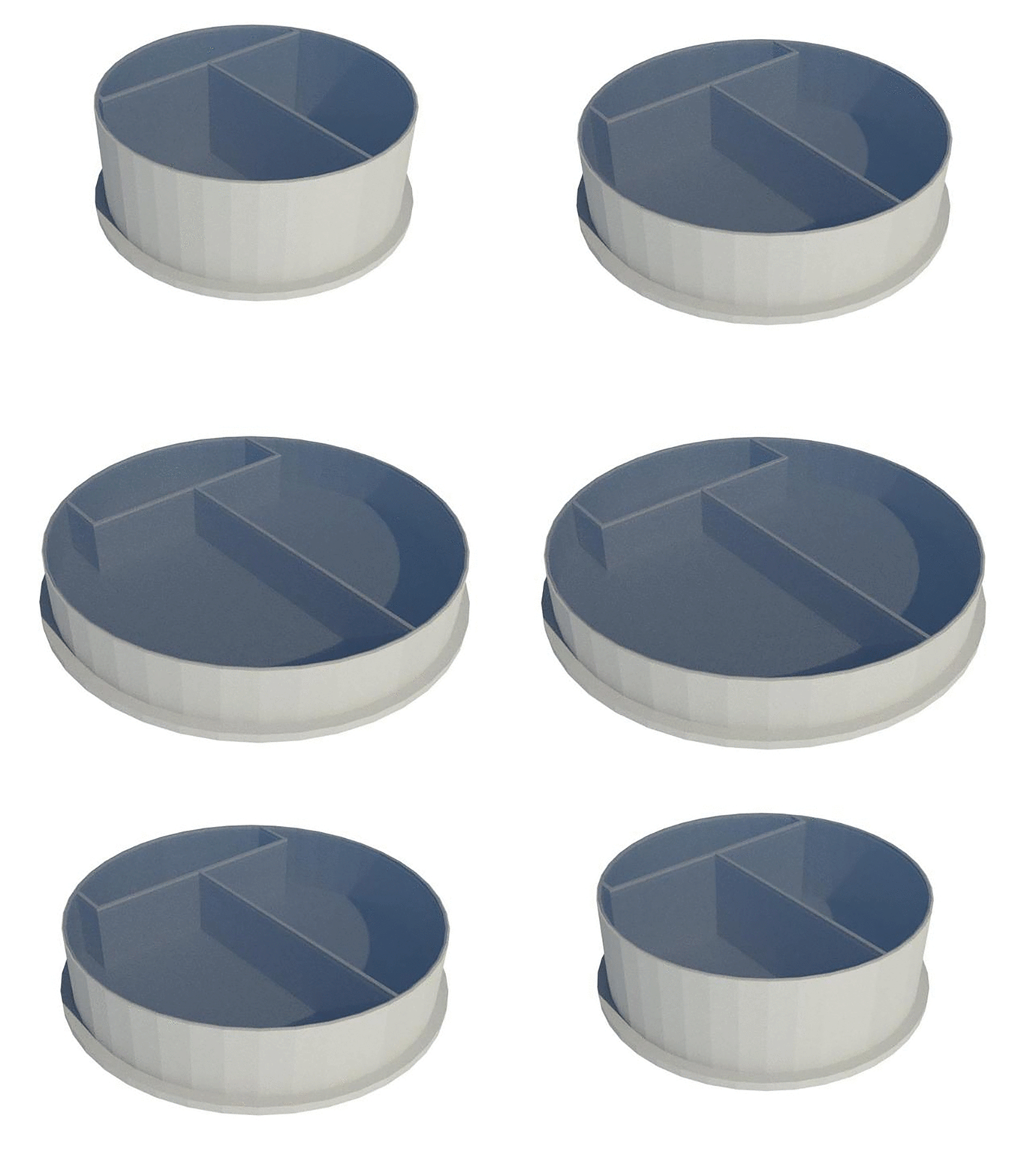
In a project in 2019, we saved the equivalent of almost a quarter of the total concrete and more than a third of the total steel used to construct the Burj Khalifa [1]. We received design drawings consisting of 39 industrial storage tanks designed to hold the effluent of a wastewater treatment plant (Figures 1 – 3). We developed our tech, using algorithms, to generate numerous structural optimization solutions. Our algorithms computed a solution that resulted in a reduction of 78,000 cubic meters of concrete (from the original 180,000 cubic meters) and 15,000 tons of reinforcement steel ⓘ (from the original 35,000 tons). This translated into a total reduction of 43% in the volume of structural materials and 42% of CO2 emissions, in addition to improving both the structural integrity and the functionality of the tanks ⓘ. The optimized tanks resulted in material savings of 71,986 tons of CO2 emissions equivalent to that of the annual energy use of 33,266 U.S homes [2]. The emissions saved would equate to removing 58,737 cars from the road for a year [2] and constituted fiscal savings of $24 million (88.15 million AED).
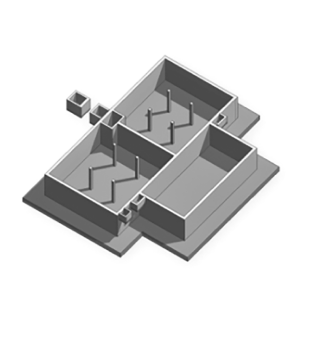
01. Input Original Design
Industrial Storage Tank: using excessive materials to achieve suggested design.
02. Software + Analysis
VAES.ai is producing iterations and studying how to attain optimal tank usage with alternative shapes.
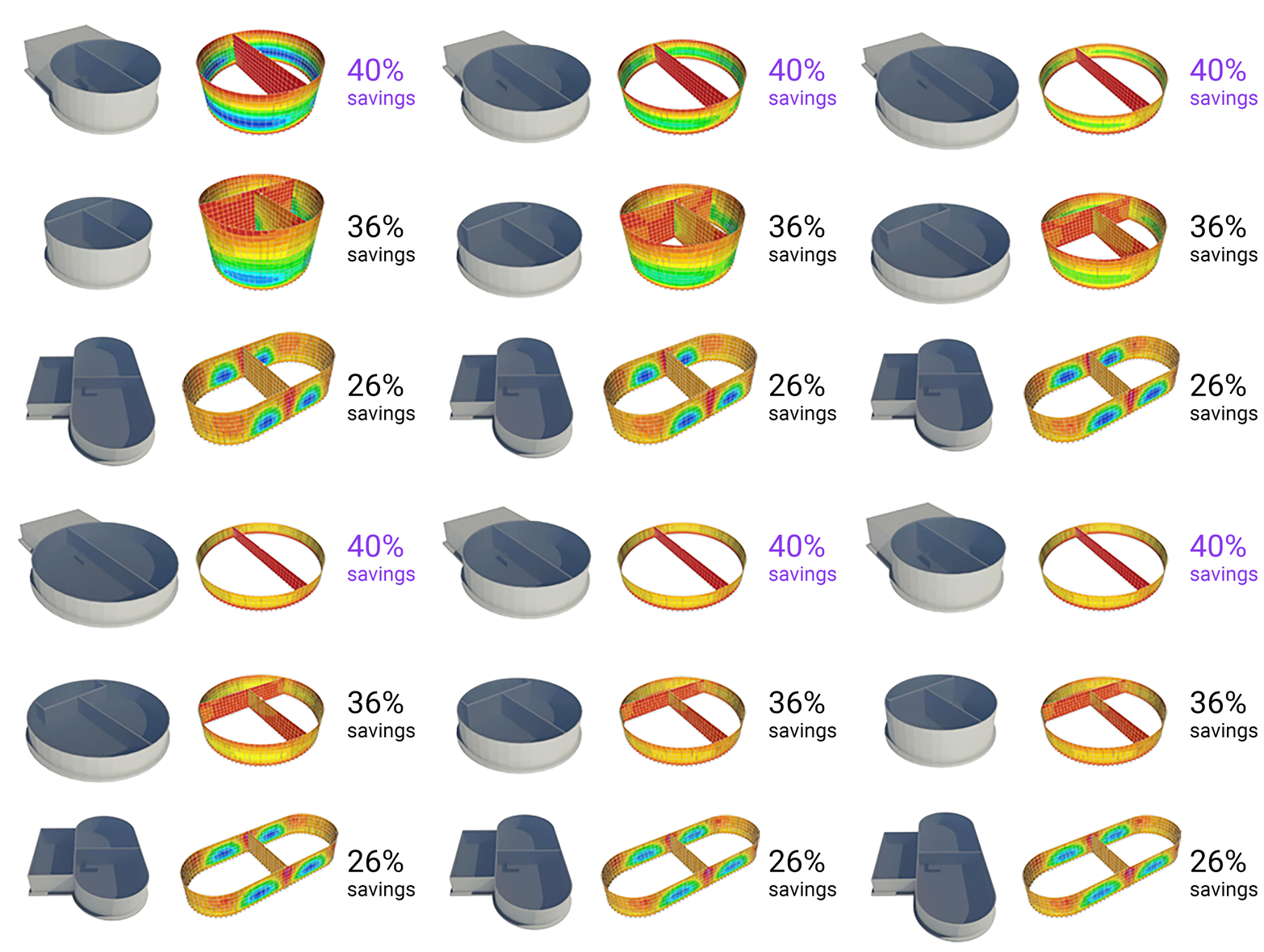
03. Efficient design + Savings
Final optimized output provided for 40% concrete savings for all 39 tanks.
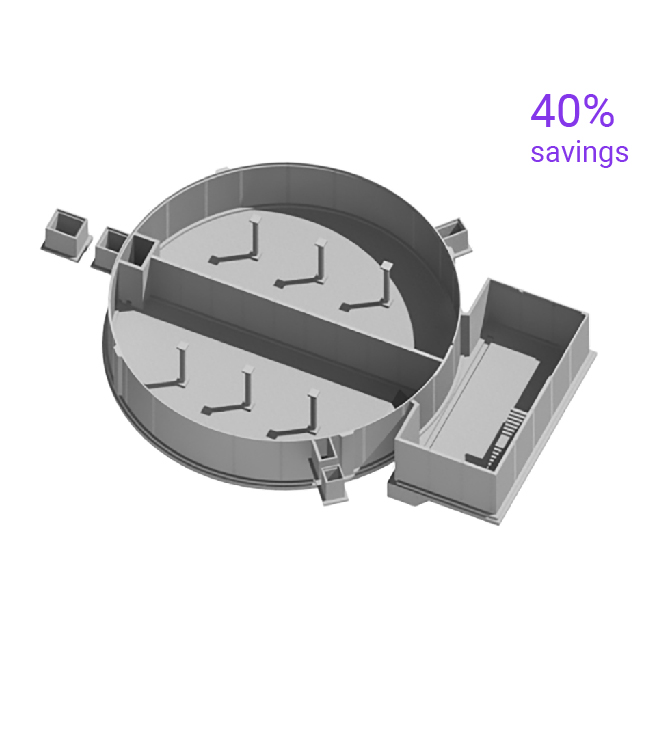
Equivalent of Burj Khalifa
This is equivalent of almost 25% of the total concrete used to construct Burj Khalifa.

Figure 1. VAES Industrial Tanks Module Geometric Optimization Solutions
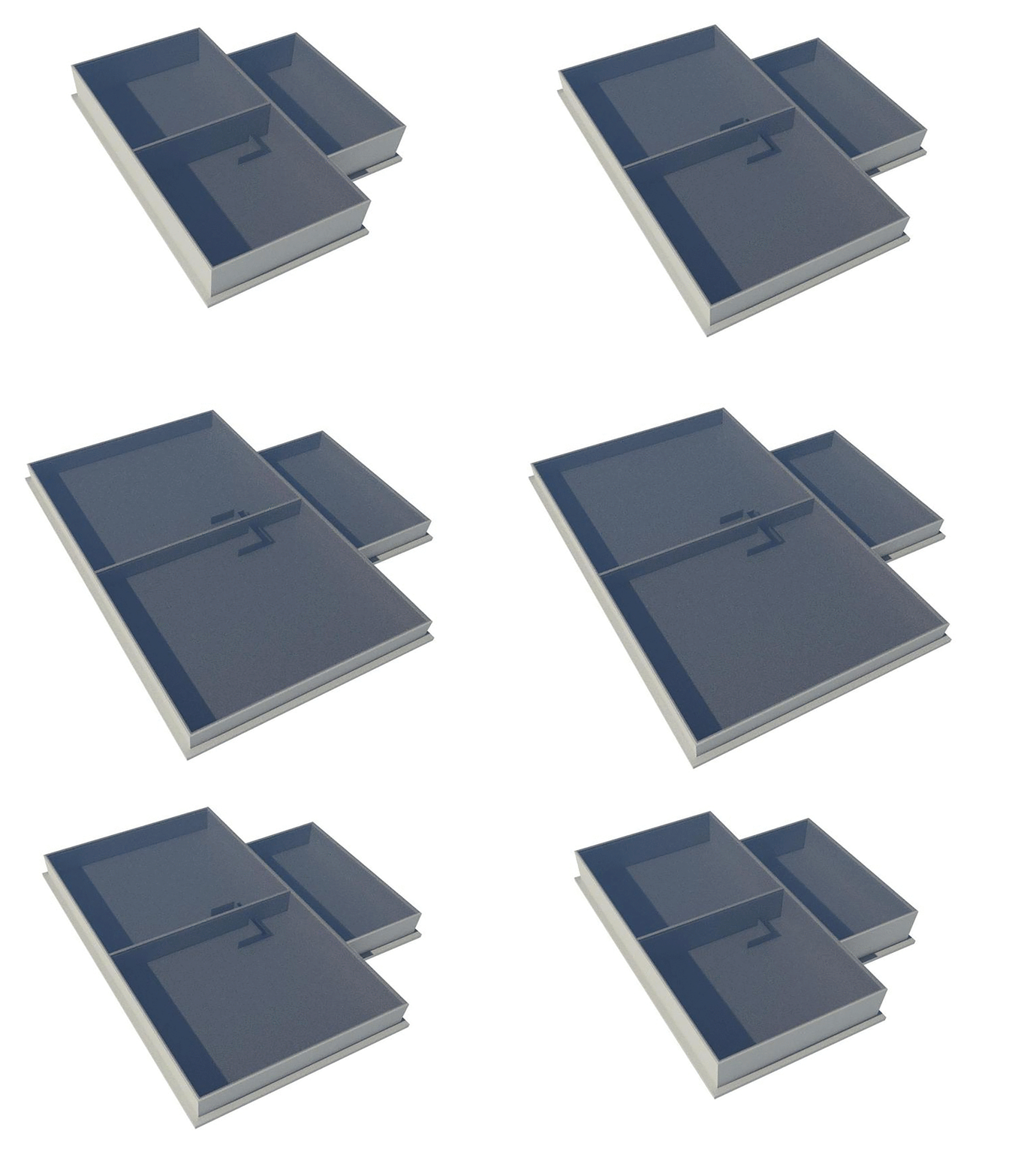
Regular Tank
Circular Tank with
Embedded Pump Room
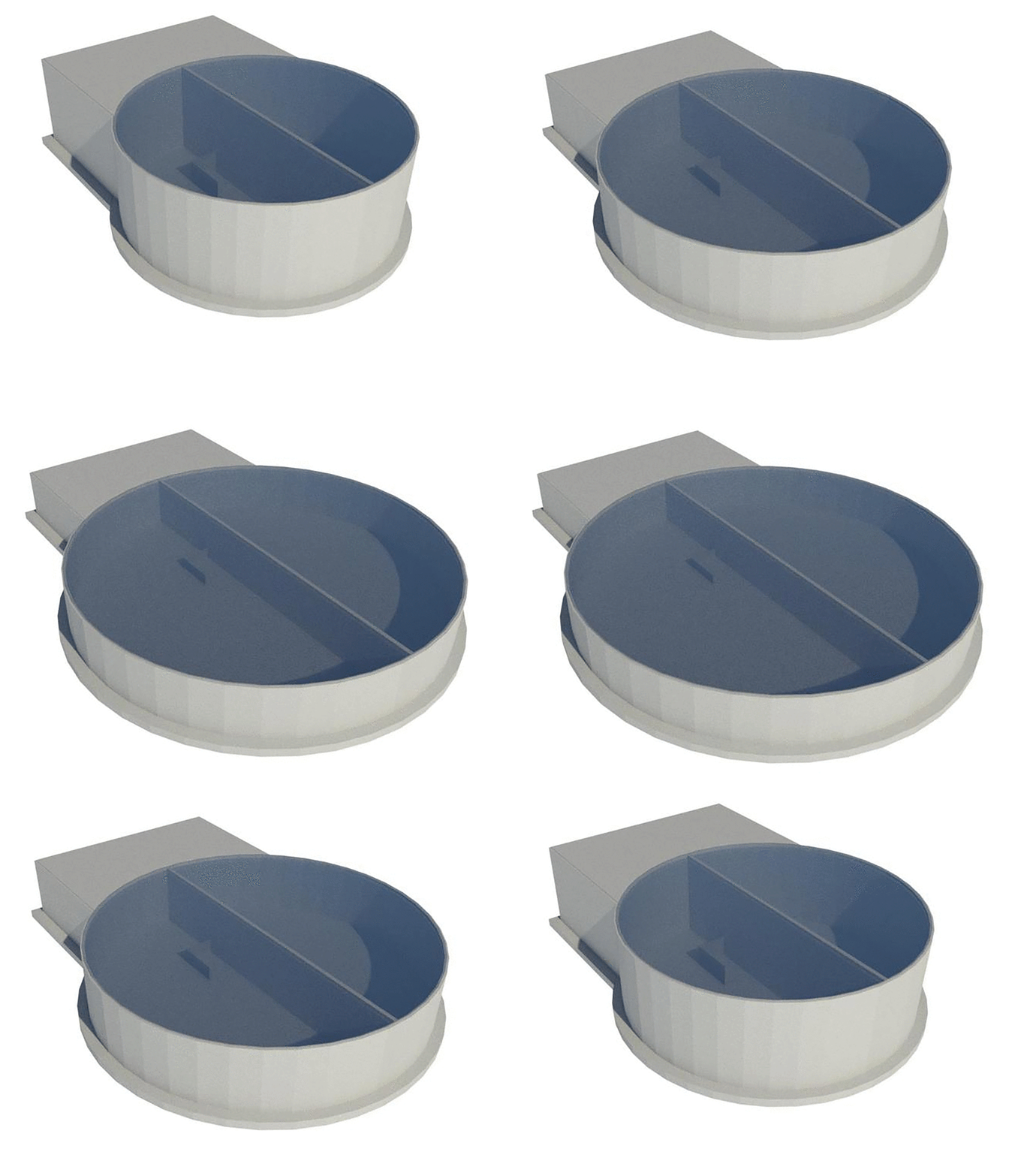
Circular Tank with
External Pump Room
Figure 2. Parametric Optimization of Tanks
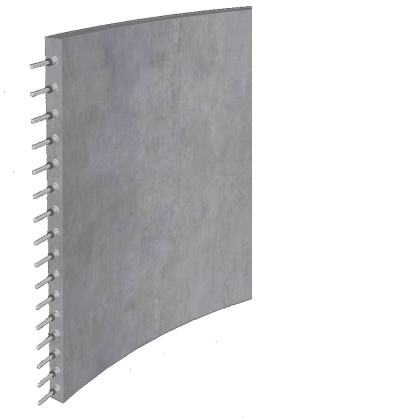
Post Tensioning Optimization
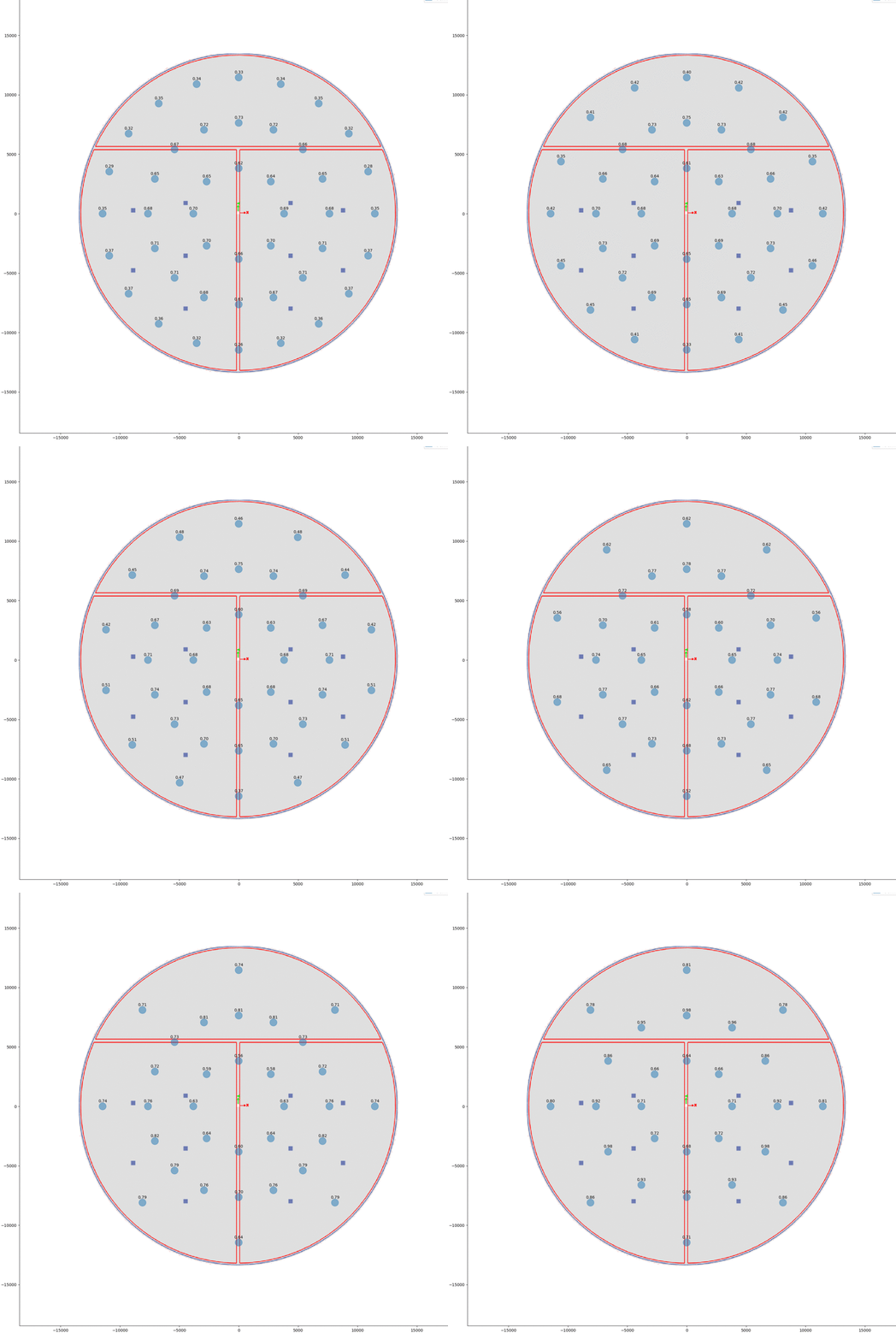
Piling Optimization
Figure 3. Optimization of tank components
Introducing VAES.ai
We are VAES.ai: a climate startup that uses deep tech to reduce the volume of raw materials when designing our cities (buildings and bridges). Within the AEC industry, this material volume reduction is invaluable due to the prevalence of structural inefficiency ⓘ —i.e. building structures use significantly more materials than needed. The presence of inefficiency indicates a shortcoming in achieving an optimal solution of minimized costs, maximized efficiency, and enhanced performance that meet industry standards. We have witnessed the painstaking time-sink of manual design optioneering to converge to an optimal solution. Recognizing this hindrance, we invested over two and a half years in research and development (R&D) of algorithms to automate our structural design process. Our team has worked on over 400 projects involving value engineering, which is the practice of pursuing efficiency while improving performance. Contrary to the conventional design process, value engineering ⓘ uses the original design as a baseline against which alternative designs are generated and compared.
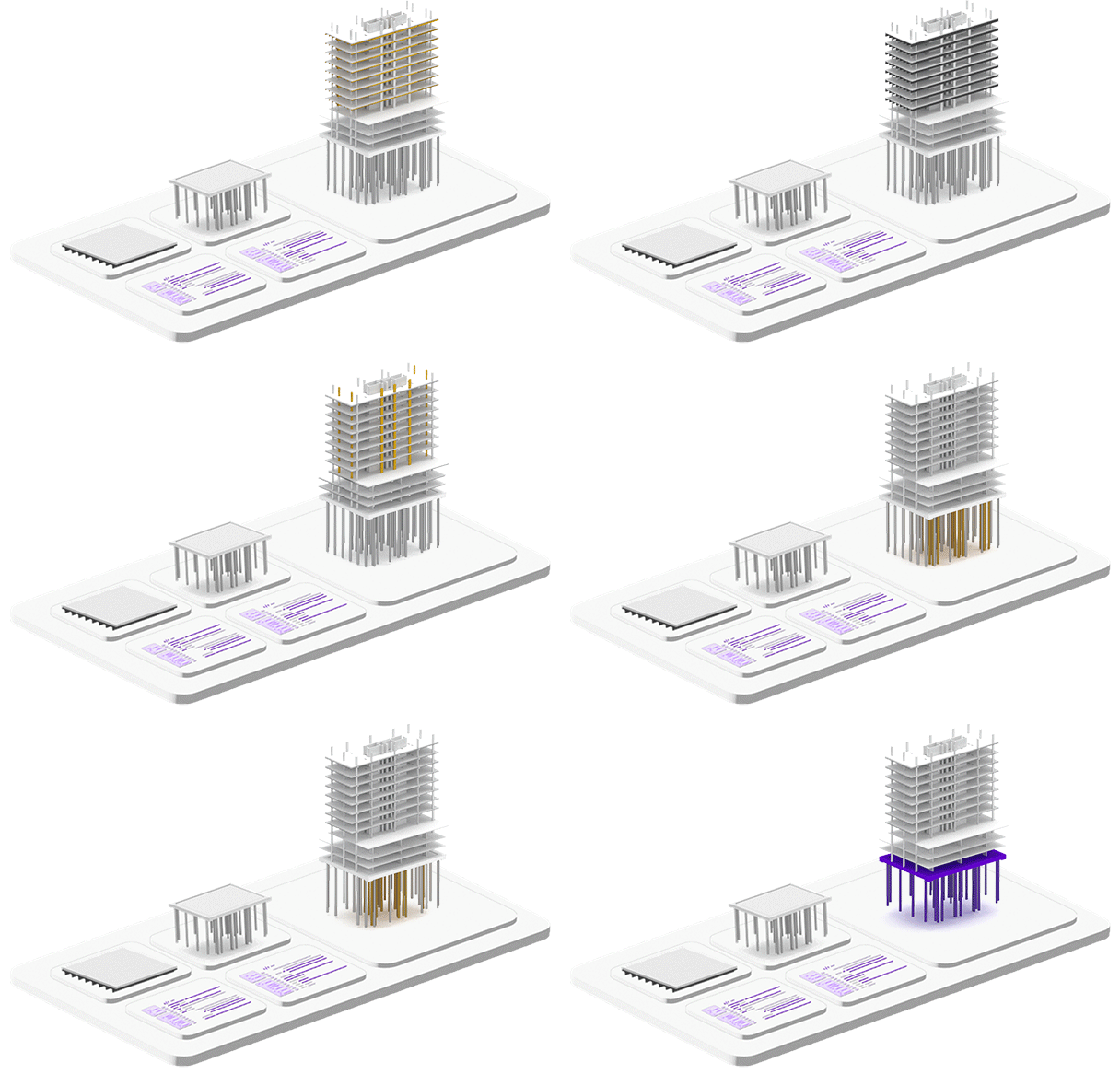
At VAES.ai, we implement AI and generative design that learns from prior experience to produce the optimal design—a method referred to as generative optimization. This method analyzes structural performance and applies a stochastic and numerical optimization (such as Simulated Annealing, Genetic Algorithms, and Ant Colony, to name a few). Grounded in research and industry experience, we validate the results of our algorithms by running them against two outcomes: optimized projects with known results and new projects with manually designed results. We run two teams concurrently, yet independently, to ensure robust results: a structural engineering team generating iterations manually and a computational team (VAES.ai) developing technology to generate optimized designs (Figure 4). This allows outputs from one team to verify those from the other team, transforming our process from purely experimental to highly regulated.
Following the convergence of the VAES.ai software to the optimal solution, human verification of the design and legal compliance are carried out. The latter differs based on geography, for instance a P. Eng in North America or a licensed engineering company registered with the local authority must review and sign off that our designs are code compliant. Our optimization process remains subject to rigorous validation by a team of structural engineers that have specialized in value engineering for decades. We develop refined processes for two factors: constructability, where we streamline the construction process; and efficiency, where we minimize the use of materials.
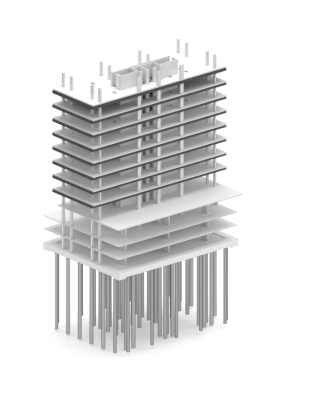
01. Upload your project files
Upload your original design files to your own dashboard.
02. Optimize your structure
VAES.ai optimization software starts analysing your design and test out optimization iterations.
03. Download optimized design
Download your optimized design with enhanced design intent, and materials and cost savings.
01. Upload your project files
Upload your original design files to your own dashboard.
02. Optimize your structure
VAES.ai optimization software starts analysing your design and test out optimization iterations.
03. Download optimized design
Download your optimized design with enhanced design intent, and materials and cost savings.
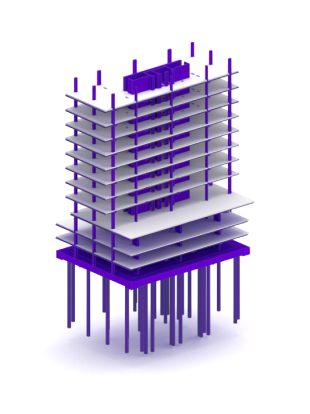
Figure 4. VAES.ai process.
Why the inefficiency?
Structural inefficiency is rife throughout the industry. We discuss illustrative examples that are not exhaustive. Civil engineering researchers at institutions in Chile and Mexico state that the design process is complex and time-consuming, making it infeasible to generate efficient design options [3]. Time constraints of the design process are a strong disincentive to spend effort and specialist expertise to develop efficient solutions. This disincentive drives the standardization of structural elements, such as unifying beam depths throughout the structure rather than uniquely assigning depths based on loads. The Use Less Group, a research team led by Julian Allwood, a Professor of Engineering and the Environment at Cambridge University, found [4]:
when we started to look at the designs of buildings with constant beam depths, we found that even ignoring this opportunity for optimization, designers are typically over-specifying the amount of steel in the building by 30-40%.
Additionally, designs are driven by flexibility to change rather than efficiency; for instance, building foundations are often structurally overdesigned to accommodate inevitable architectural changes as they arise during the design process. Engineering design firms are inversely incentivized to overdesign, as John Orr [5], a Professor of Structural Engineering at Cambridge University, concluded after surveying 129 engineers across the globe:
… the reality [is] that designers face no significant penalty if structures are over-designed, and that over-design is sometimes viewed as a positive attribute.
The lack of incentive towards efficient design is further exacerbated due to the fragmentation of the design and construction processes [6]. In addition to assumptions regarding construction site limitations, specialist expertise, and schedule and budget restrictions, the sheer number of variables both across and within disciplines poses a significant challenge in optimizing a design. For instance, different structural elements within a single project might require multiple specialists, who sometimes use varying software—attempting to align these project elements exposes the fragmentation. This specialization, while needed, hinders the efficiency of designing the structural system as noted by Ove Arup [7] in his 1968 lecture to the Institute of Structural Engineers:
The need for specialization is obvious enough. But whereas invention and repetition must disregard boundaries and demolish barriers in order to be effective, specialization creates barriers.
Furthermore, structural inefficiency results from lack of industry data dictating improvements in future designs. In another study [8], Orr stated:
Structural engineering remains the only engineering discipline that does not consistently measure in-service performance of its designs to drive improvements in both operation and future design. The status quo, where structural material wastage in the order of 50% is common, cannot continue if we are to meet carbon emissions reduction targets.
While these factors frame the design and construction industry, there is growing academic research attempting to uncover structural inefficiency.
Structural Inefficiency is a global problem.
We identified a gap in our industry—and developed the tools to address it. The VAES.ai team consistently finds structural inefficiencies and continues to develop alternative systems to design efficient buildings that reduce structural volume. The inefficiency uncovered during our tanks project is not an isolated situation; we found inefficiency in the 400 value engineering projects that our team worked on. This industry phenomenon corroborates our academic research findings on the prevalence of structural inefficiency. We are performing a comprehensive literature review on structural inefficiency denoting excess material use, specifically concrete and steel. To date, we reviewed 340+ publications that assessed a total of 1700+ structures across 50+ countries. The research we collated established that between 0.4% to 62% of building structures’ materials (concrete and steel) can be reduced without compromising structural performance.
Structural inefficiency, or excess material use in building structures is addressed by researchers around the globe (Figure 5). In academia, structural inefficiency is often assessed using the utilization ratio, which measures the best structural performance against load requirements [9]. Employing this method, academics in Cambridge University—Moynihan & Allwood [10] and Dunant et al. [11]—applied a rigorous methodology to an extensive sample of buildings in the UK. They assessed the utilization ratio of steel in 23 and 30 buildings, respectively. While their methodologies varied, both found significant potential for material reduction. Moynihan & Allwood [10] concluded that 46% of steel mass in beams and columns were underutilized, while Dunant et al. [11] found an underutilization value of 36%.
Another study worth highlighting is AJ Unander’s [12] MIT master’s thesis which analyzed an extensive sample of 640 buildings across more than 16 countries. Unander [12] concluded that the theoretical optimized buildings in literature weigh on average 466 to 542 kg/m2 less than unoptimized buildings: an average reduction of about 38% in total building weight. He found that:
… on average, recently constructed buildings contain nearly twice as much structural material as required by structural constraints.
Unander’s study sample consisted of data from the Database of Embodied Quantities Output (deQo) provided by the MIT Building Technology Program and the Circular Engineering for Architecture Lab in ETH Zurich. The database was one of the largest for buildings, including data on weight, use, floors, material intensity and embodied carbon content. It included buildings from every region in the world except South America. These researchers’ selected studies prove that the potential for optimization, across the globe, is evident.
Structural Inefficiency is a global problem.

Last updated: 15th June 2026 1:24PM
340+
Publications
50+
Countries
1700+
Structures
Material Inefficiency Average: ~22%
Emissions Inefficiency Average: ~28%
Cost Inefficiency Average: ~19%
We are conducting an ongoing, systematic literature review on the global prevalence of structural inefficiency in the AEC industry. Our review identified 340+ academic publications attributed to 50+ countries. These countries were retrieved through two methods: geographic locations and building codes. The geographic locations are associated with real-world projects or case studies, while building codes are associated with generic case studies that follow the structural/building codes of specific countries (such as ASCE, Euro Codes). The prevalence of structural inefficiency dictates the need for structural optimization, or the generation of optimum solutions to structural designs. Structural optimization reduces the materials used in construction, consequently reducing the most carbon-intensive phases in the building life cycle (50 to 70%), construction costs, enhancing the performance of structures, and maximizing the utilization of structural elements.
Figure 5. Infographic - Structural inefficiency being addressed by researchers around the globe.
The environmental toll of structural inefficiency is heavy.
Excess material production emissions have a lasting impact on the environment. Embodied carbon emissions, resulting from material extraction, manufacturing, and production, constitute between 28% to 50% of a building’s life-cycle carbon, depending on operational efficiency measures [13, 14]. A study examining 403 high-rise residential buildings in China revealed that more than 65% of buildings’ carbon emissions are attributed to structural materials (concrete, steel, and prefabricated elements) [15]. In other structures, like warehouses, the structure alone is responsible for more than 75% of carbon emissions [16]. Currently within the global building sector, operational carbon represents 67% and embodied carbon represents 33% of annual carbon emissions [17]. As we push towards more efficient building operations, the share of embodied carbon stands to double [18, 19]. Today, the ratio of the building sector’s operational to embodied carbon is about 2:1. According the World Green Building Council (WGBC) [18], by 2050, in just 26 years from now, that ratio is projected to almost be 1:1 ⓘ.
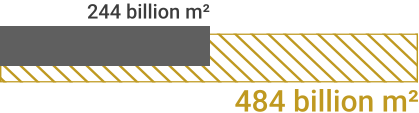
The use of concrete and steel in construction constitutes 11% of global carbon emissions [17]. That is more than double the combined emissions of fuel combustion from domestic and international aviation and shipping (Figure 6) [20]. This includes all the cars, vans, buses, medium and heavy freight trucks on the road, in addition to all the international and domestic planes in the world.
11% of the world’s CO2 emissions are concrete and steel, twice as much as the emissions of the Shipping and Aviation industries, combined.
Data source: International Energy Agency (IEA), 2022.
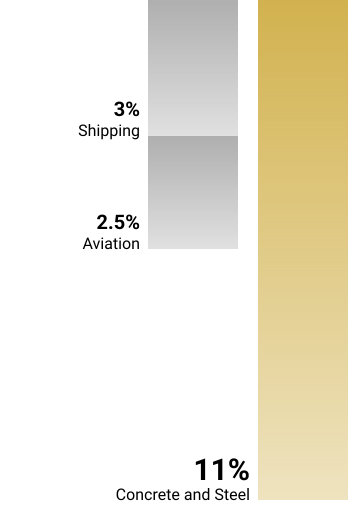
Data source: International Energy Agency (IEA), 2022.
Figure 6. Concrete and Steel Production Emissions.
The emissions from construction activities have been—and are expected to keep on—increasing exponentially over the century. Economically, construction is among the largest industries in the world. Spending on construction activities constituted up to 13.5% of global gross domestic product in 2017 [21]. From 1980 to 2020, construction-related steel production more than doubled from 0.36 Gt to 0.94 Gt [22], and concrete production increased more than 4 times from 8.17 Gt to 34 Gt [23]. As global built-up floor area is expected to double by 2060 [24], so is the demand on construction materials [25] (Figure 7). And as the construction material demand will double, in turn, so will their carbon emissions. In 2022 alone, 4,298 kg of concrete and 119 kg of concrete were produced for each person alive on the planet ⓘ. Our annual global production of concrete and steel—about 35 Gt—could fill a 5 m deep swimming pool almost the size of Cairo.
Compelling research suggests that human-caused greenhouse gas (GHG) emissions stand as the primary driver of climate change [26]. Carbon emissions constitute 75% of these GHG emissions. In 2022, global temperatures increased by 0.91°C [27]. Climate change worsens with rising temperatures and unfolds into devastating climate disasters, in the form of floods, heat waves, and droughts, to name a few [26]. According to WHO technical officer, Saverio Bellizzi, and academic colleagues [28], by mid-2022, climate disasters had already displaced 100 million individuals. These events will only worsen by 2050, when they project the displacement of 1.2 billion individuals due to a 2°C rise in global temperatures [28]. These harrowing statistics underscore the urgent need for action to mitigate the environmental repercussions of emissions-heavy industries—one of which is concrete and steel production.
Global urban floor area expansion
Concrete and steel production



Figure 7. Concrete and steel production, their emissions and global urban floor area expansion.
Structural optimization has high potential to reduce excess material use.
defaultContent1
Figure 8. Annual publication counts of structural optimization in the AEC industry from a sample of 4,665 publication.
The expanding field of structural optimization is prevalent in academia but has limited application in the construction. Most of the structural optimization publications we found focus only on developing the optimization techniques and proving their effectiveness. Among the 340+ publications we reviewed on structural optimization, only ~125 were found to optimize real-world case studies of which only ~30 implemented the optimized solution in practice (Figure 9). Academics from the Universities of Cambridge and Leeds [29] shed light on the evident gap of applying structural optimization in industry:
[optimization techniques] are rarely used in practice, largely for prestige projects pushing the boundaries of engineering and not for the bulk of constructions where the potential for greenhouse gas emissions mitigation is the highest.
Tangential to this finding, Rory Clune, Partner at McKinsey & Company, wrote in his MIT PhD dissertation [30]:
There are strikingly few examples of buildings, bridges, and other infrastructure designs using optimization, even though efficient and cost-effective design of such resource-intensive and expensive projects is of great importance to society.
We’ll briefly address the limitations that impede the application of structural optimization.
Among the 340+ publications we reviewed on structural optimization, only ~125 were found to optimize real-world case studies of which only ~30 implemented the optimized solution in practice.
Figure 9. Distribution of structural optimization publications by structure type in the AEC industry.
Tech is especially difficult in the construction industry.
Despite being one of the largest industries globally, the AEC industry has historically been slow to innovate [31]. Today, it ranks among the least digitized industries worldwide [32]; due to several factors [33]. First, the value chain is fragmented among numerous stakeholders, including contractors and subcontractors [6]. Their short-term contracts, pose challenges for coordination and digitization of workflows [33]. Second, teams and contractors change from one project to another. This transient nature of the workforce hinders the adoption of new work methods [31]. Third, each project presents unique needs, such as site-specific geography and hydrology challenges, making it difficult to efficiently develop replicable systems [34].
These recurring project-specific constraints aren’t applicable in the aircraft and automotive sectors—which see singular designs applied countlessly across the industry. Using developed technologies in these sectors [35], designs could take years to be optimized, but are then largely standardized and mass-applied on structural components. Conversely, construction projects face shorter design timelines and unique situational demands. Optimizing reinforced concrete, for instance, might vary from one region to another, further complicating structural optimization implementation. Additionally, compared to the automotive industry, the AEC industry demonstrates relatively low AI adoption [36, 37]. This is primarily due to either insufficient project data masses or underutilization of project data that could feed AI algorithms [37].
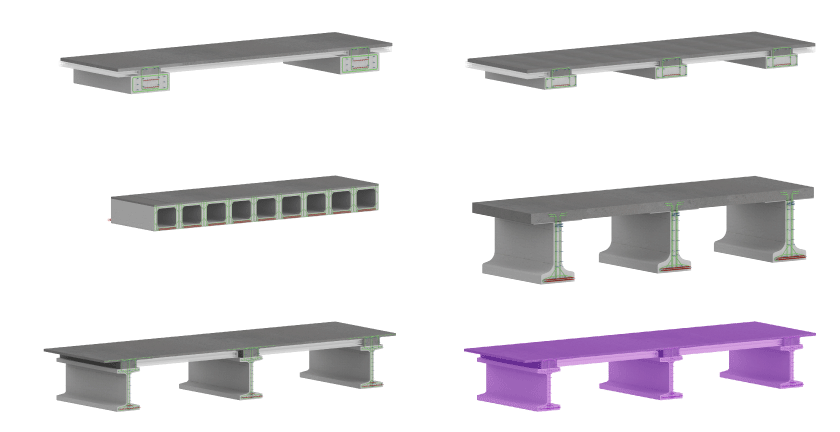
Exploring unfamiliar territory, our engineers at VAES.ai employ Ai-driven algorithms to enhance the optimization of building structures. Across our projects, our computation objective ranges from optimizing the structural element size, the shape of the structure, the overall topology, and the layout optimization (Figures 10 – 12).In our storage tanks project, VAES.ai optimized the choice, arrangement, size, and volume of structural components for efficient use of materials. Our software allows us to simultaneously explore several design options within a brief timeframe ⓘ, running the optimization of material quantities and considering design approaches not implemented in the original design. To overcome time constraints, VAES.ai assesses and targets high-cost and high-impact design decisions for development. This process is founded on the 80/20 principle, indicating that a small percentage of factors yield the majority of outcomes. In addition, VAES.ai runs sustainable practices of project tool development and expansion for future projects.
01. Input Original Design
Band beam.
02. Software + Analysis
VAES.ai is producing iterations and studying how to attain optimal concrete and steel usage with alternative beams shapes.
03. Efficient design + Savings
Final optimized output provided with savings in materials.
01. Input Original Design
Band beam.
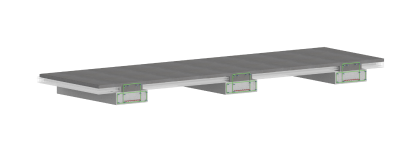
02. Software + Analysis
VAES.ai is producing iterations and studying how to attain optimal concrete and steel usage with alternative beams shapes.
03. Efficient design + Savings
Final optimized output provided with savings in materials.
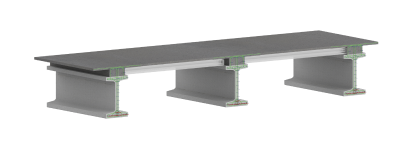
Figure 10. Example on Element Size Optimization by VAES
01. Input Original Design
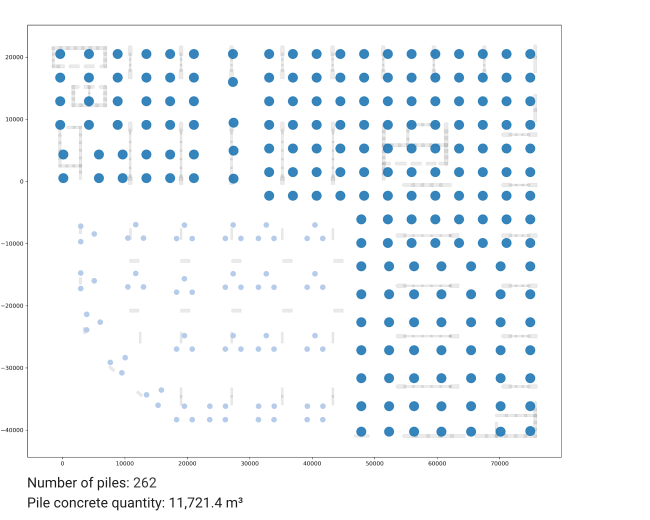
Piles layout and dimensions were not optimal.
02. Software + Analysis
VAES.ai is producing iterations and studying how to attain optimal concrete and steel usage with alternative piles dimensions and layout.
01. Input Original Design
Piles layout and dimensions were not optimal.
02. Software + Analysis
VAES.ai is producing iterations and studying how to attain optimal concrete and steel usage with alternative piles dimensions and layout.
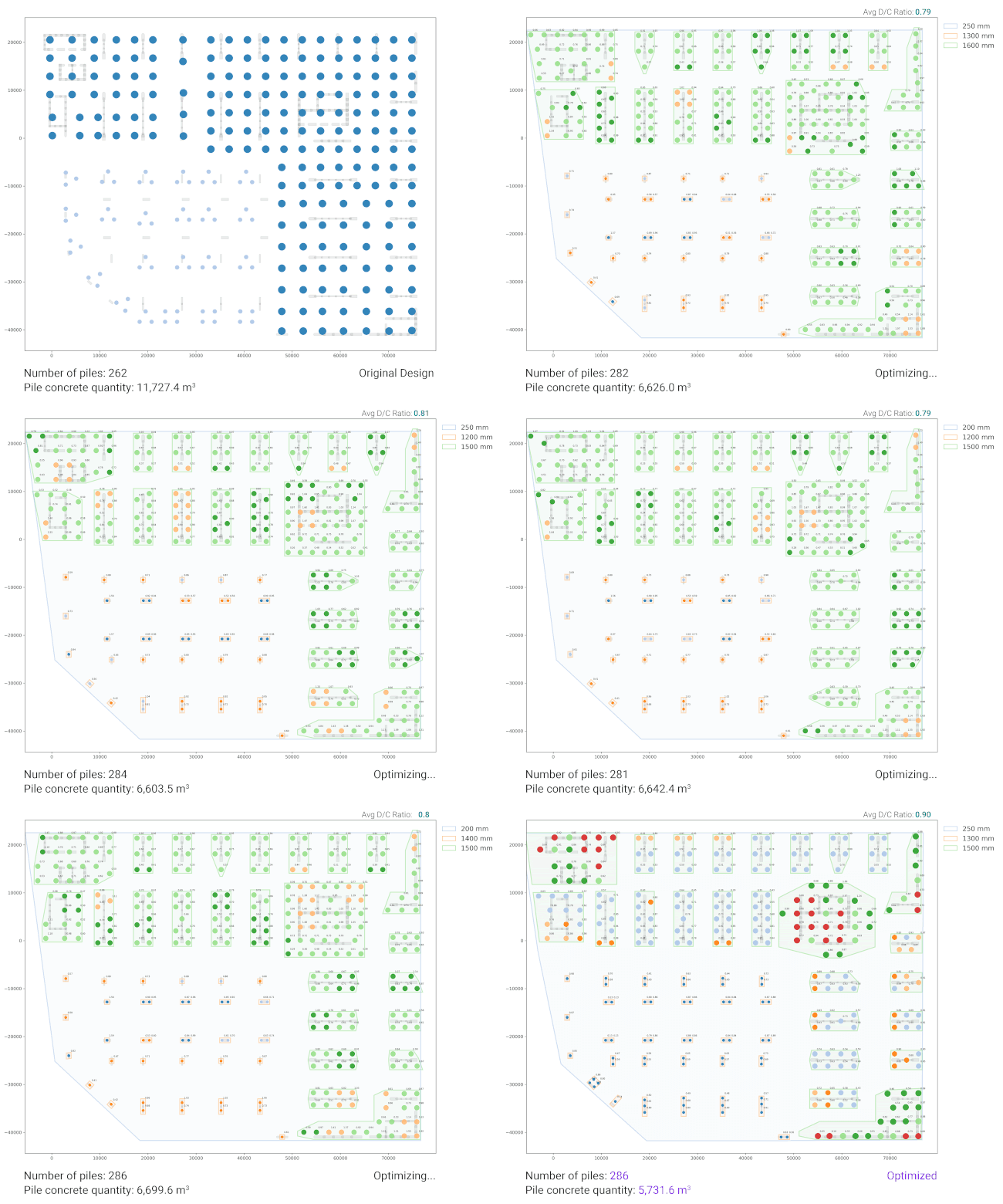
Figure 11. Example on Layout Optimization by VAES
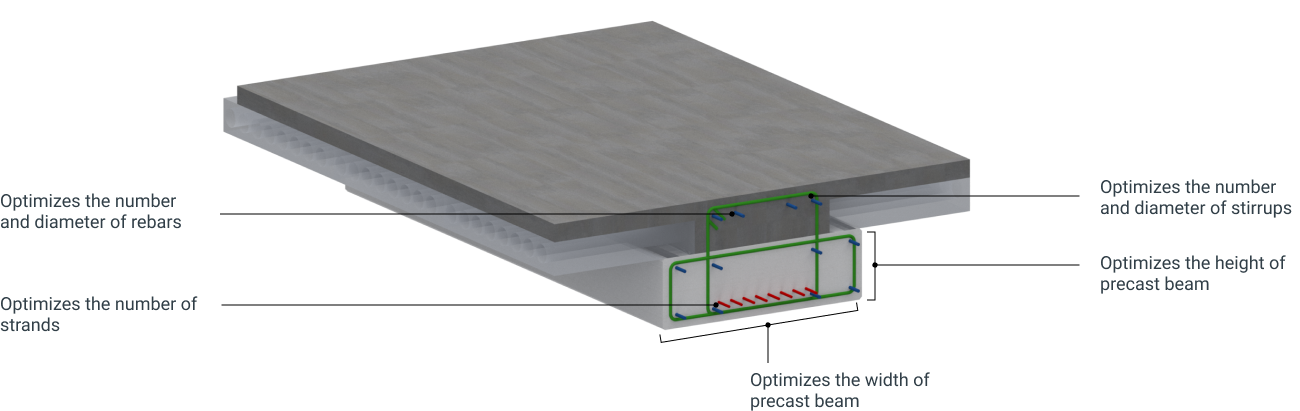
Figure 12. Precast Beam Component Optimization
Scaling VAES.ai can positively impact the environment
Technologies like VAES.ai are not yet an obvious effective and immediate climate change mitigation measure. The Inter-governmental Panel on Climate Change (IPCC) [38] suggests that we should cut down total global carbon emissions by 54% from our current 2022 level by 2030 and reach net zero carbon emissions by 2050 to maintain the 1.5 degree in global warming. Structural efficiency can significantly lead us through these climate targets and reduce 4.6% of total global carbon emissions by 2050 [9].
VAES.ai, one of many solutions to carbon reduction, aims to accelerate the timeline for making a positive impact, instead of 20 years from now. In 21 projects, VAES.ai optimization achieved an average of 17.5% reduction of concrete volume. Globally scaling up VAES.ai tech on buildings has the potential of achieving a reduction of almost 2.5 billion tons of concrete—translating to almost 197 million tons of CO2. With over two years dedicated to R&D, we deeply understand the challenges within the AEC industry. We recognize the potential for improvement and collaborate with authorities to incentivize efficient construction practices. Our focus is to develop advanced tools and processes to enhance design efficiency and integrate within construction companies to impact a larger scope of projects.
The trajectory of our expanding research, knowledge, and expertise in the building technology sector will be channeled through the Built Environment (tBE) platform. tBE aims to expose how we currently build our cities, how that irreversibly changes our natural environment, and how we can mitigate the impact.
What can you do now?If you are a contractor, or developer—sign up at VAES.ai dashboard and start uploading your project documents to get value added engineering solutions to your projects. If you are an engineer—explore our Careers to find information about current job postings and consider joining our team.