Sinking Megadeltas.
Explore how our most densely populated coastal regions are sinking due to climate change.
Article Highlights

Sea level rise poses a threat to our coastal regions—this threat is exacerbated in deltas formed at the convergence of rivers discharging water into another body of water.
Our seas rise as they expand in volume from the absorption of massive amounts of heat from the atmosphere, in the form of greenhouse gases—the fuel for global climate change.
An average of half a billion people currently reside in coastal areas anticipated to be submerged underwater within this century.
11% of the global carbon emissions aiding in this sea level rise is driven by the construction industry—this highlights the urgent need for the industry to reduce its carbon footprint.
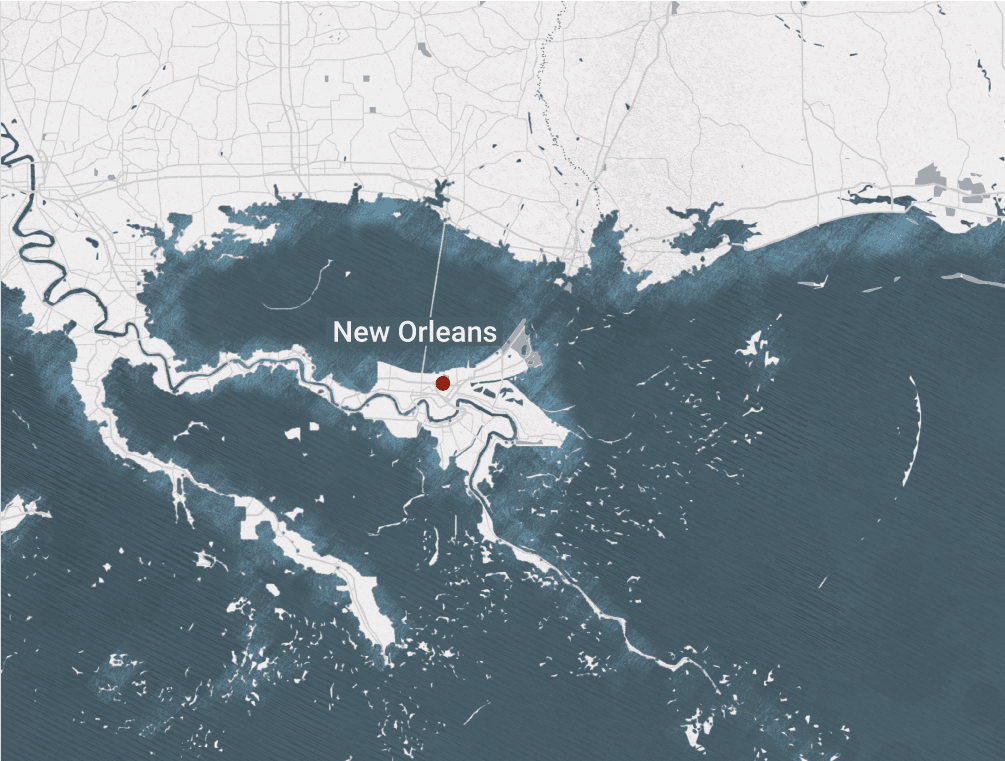
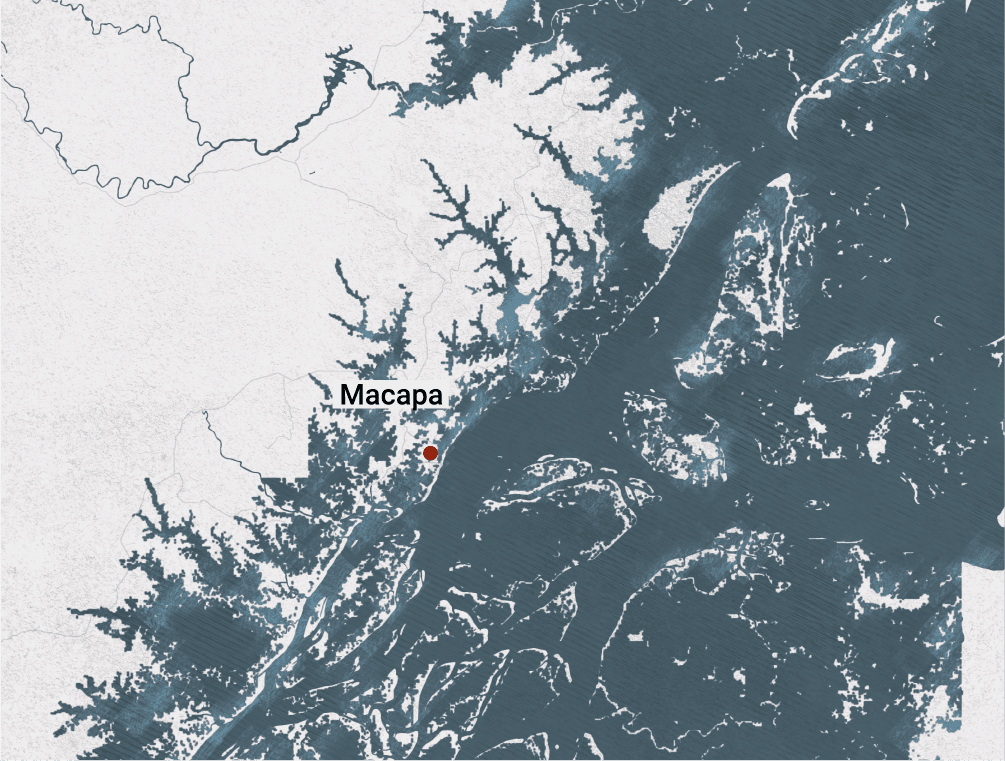
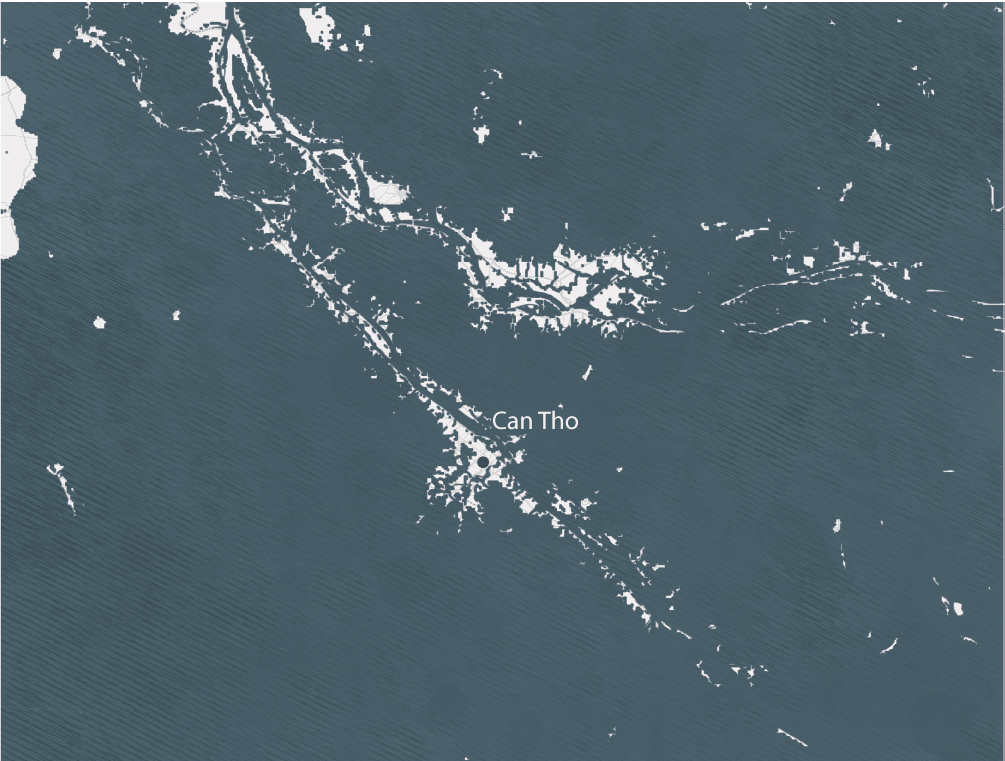
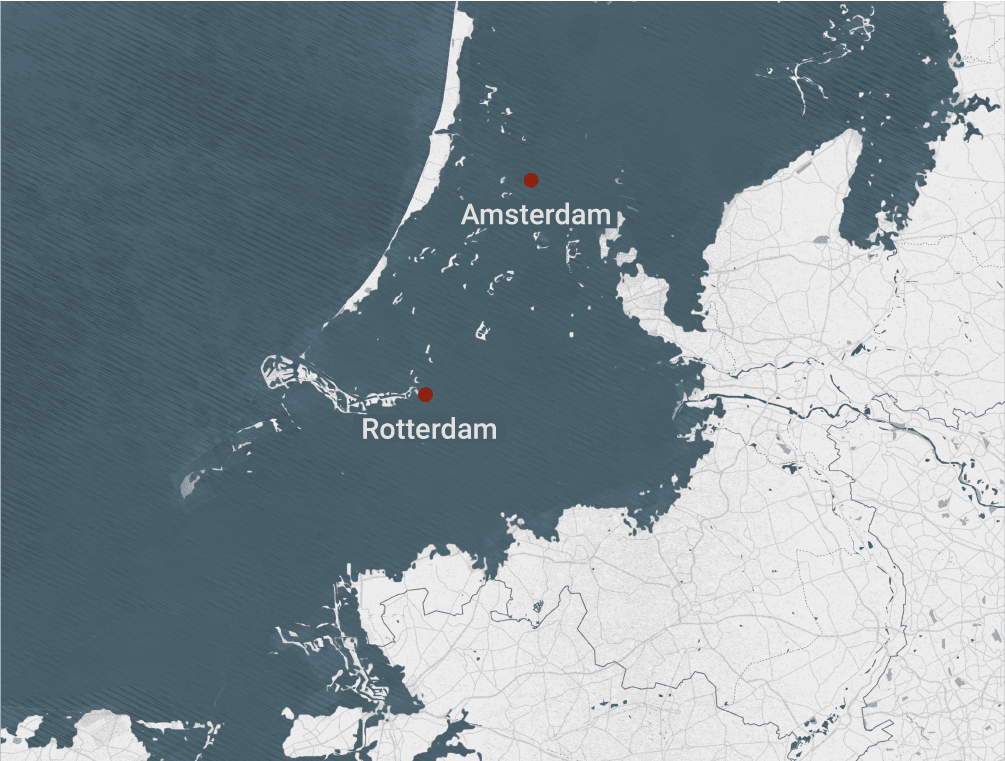
Comparative maps display before-and-after scenarios of some of our most vulnerable mega deltas—visualizing the extent of submergence between today and 2100.
The driving force behind rising sea levels and sinking cities.
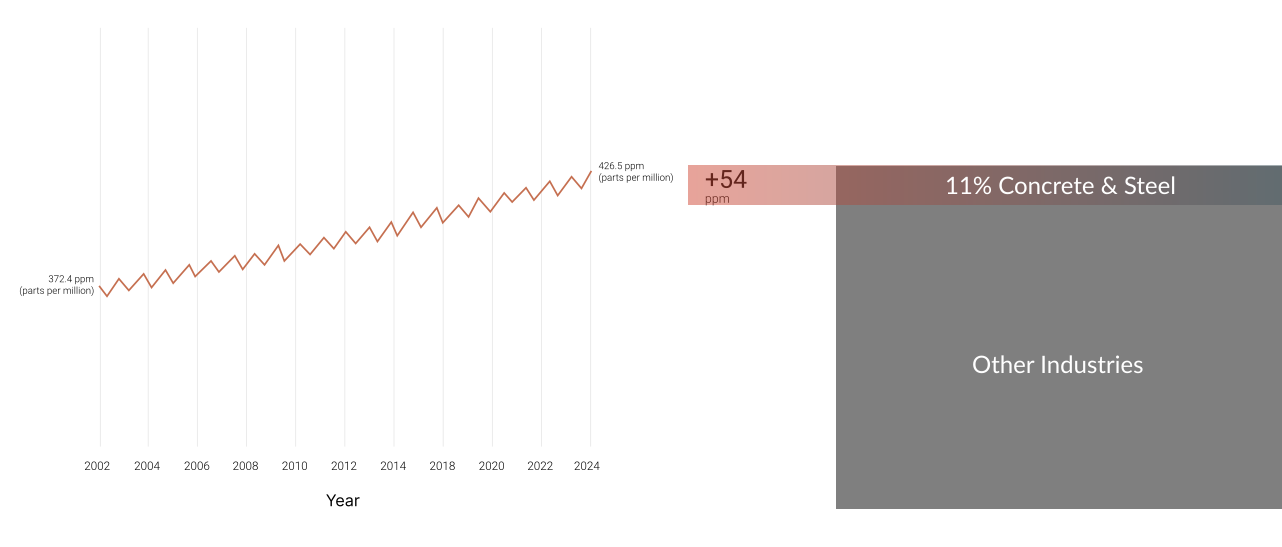
The rise in sea levels is primarily driven by two factors [1] : the melting of land ice and the warming of seawater, both consequences of global warming. Industries fueling cities release approximately 28 billion tons of carbon emissions—almost 75% of global emissions—leading to heat retention in the atmosphere and subsequent global temperature increases.
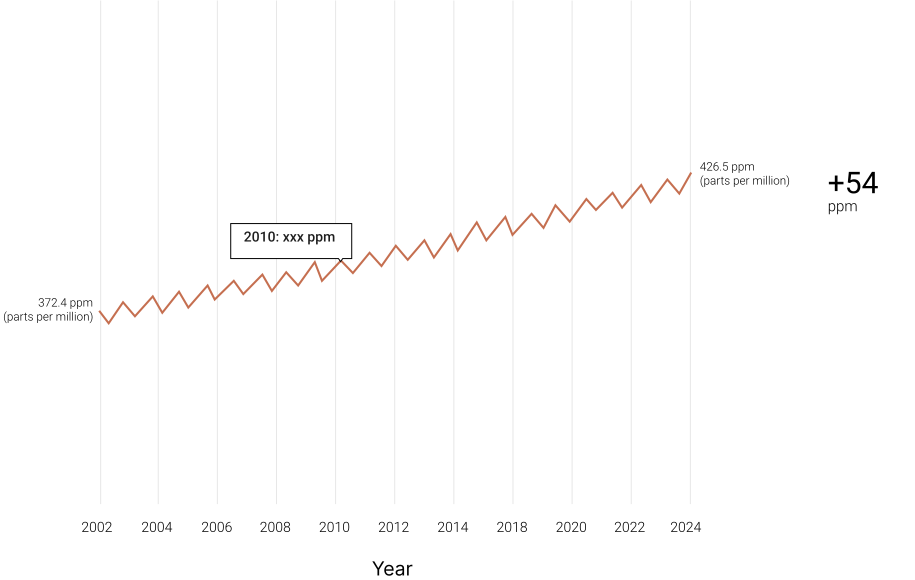
Figure 1. Factors contributing to global sea level rise from 2002 to 2024. Data sourced from NASA https://climate.nasa.gov/vital-signs/sea-level/?intent=121
How does this impact our sea levels?
2024
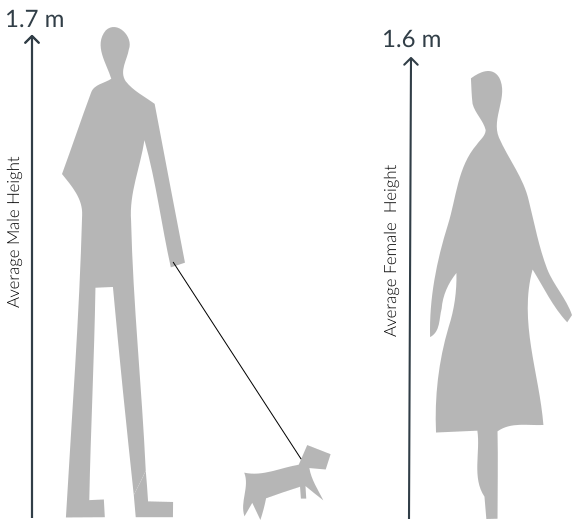
Current Sea Level
0.1 m
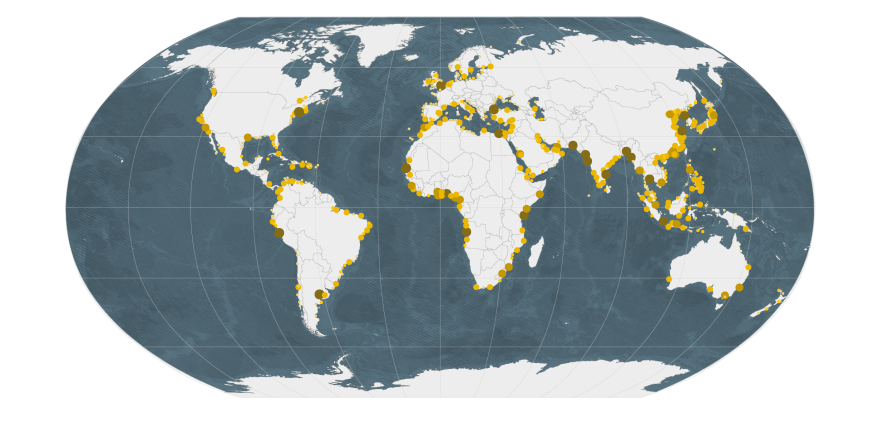
Figure 1. Source: Sea Level Rise and Coastal Flooding (C40 Cities, 2018).
This submergence threatens countless coastal populations.
The UN claims that almost 10% of the world’s population—900 million people—reside in vulnerable coastal regions [2] . Among them, estimates suggest that between 250 and 800 million people currently inhabit areas anticipated to be submerged underwater within this century. By 2100, numerous coastal cities are projected to sink between 0.3 to 1.8 m below Earth’s rapidly rising seas [3] [4] , this range is due based on projected scenarios with various intensities. The UNDRR claims that assets worth up to US $14.2 trillion are threatened by 2100—that is almost 20% of the global GDP [5] .
1/8
The Ganges-Brahmaputra Delta, Bangladesh
CURRENT STATS IN 2024

200 million
Inhabitants

1.06 billion
Tons of Sediment
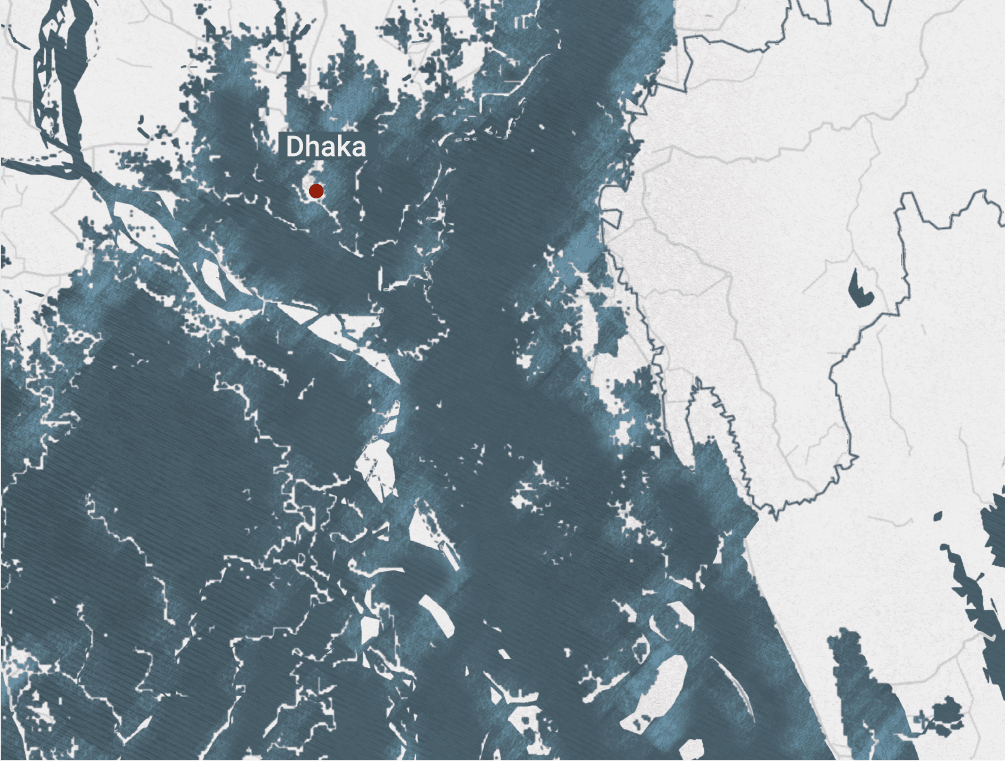
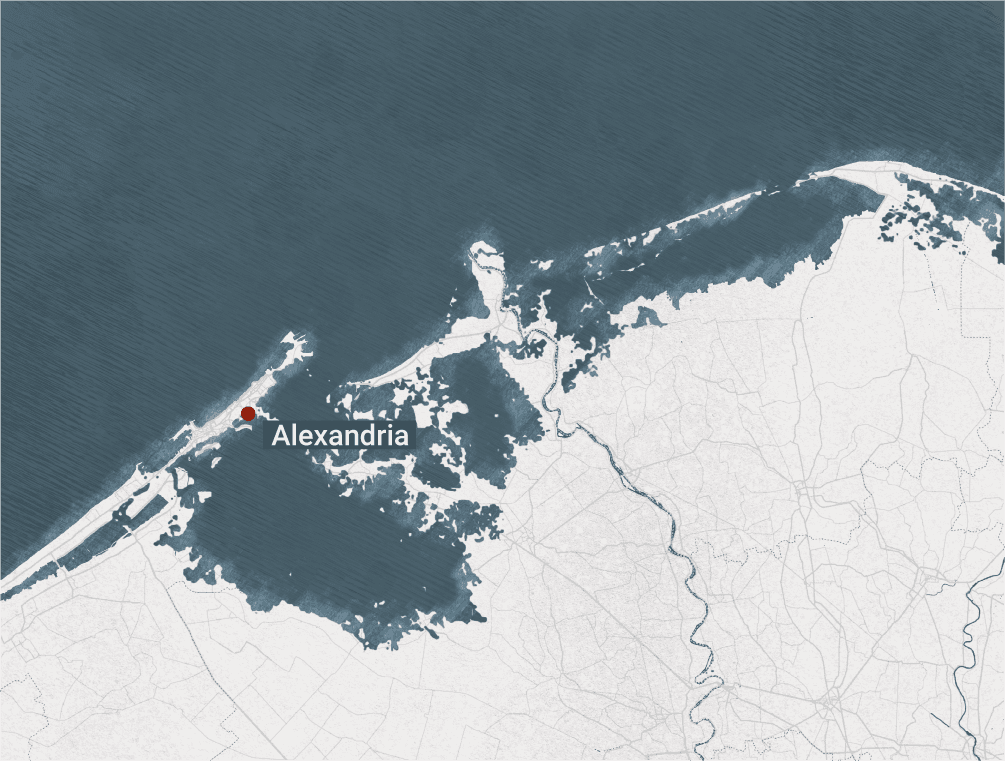
The world’s largest river delta—the Ganges-Brahmaputra delta—sustains the most densely populated area among all deltas accommodating approximately 200 million residents [13] . As one of the most fertile deltas in the world, it is an essential social, economic, and agricultural resource for Bangladesh [14] . This delta holds the world’s third largest sediment supply, which was halved in the 48-year period between 1960 and 2008 [15] [16] , due to development and construction. The principal natural barrier to offsetting sea level rise is a resupply of this lost sediment to maintain land buildup and elevation [17] . The low-lying topography of the region makes 80% of the land ideal for cultivation, but agricultural productivity is heavily threatened by rising seas, which flood and salinize fertile land [18] . The Ganges-Brahmaputra is one of three most vulnerable deltas in the world to climate change, along with the Mekong Delta in Vietnam and the Nile Delta in Egypt [7] .

Bangladesh
2100
2024
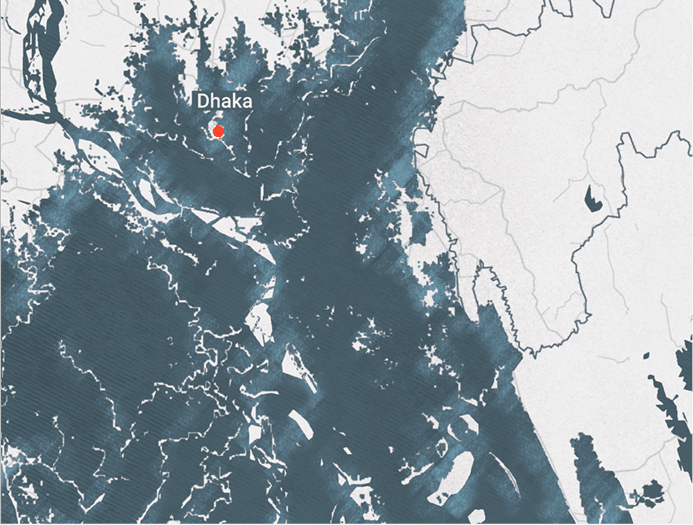
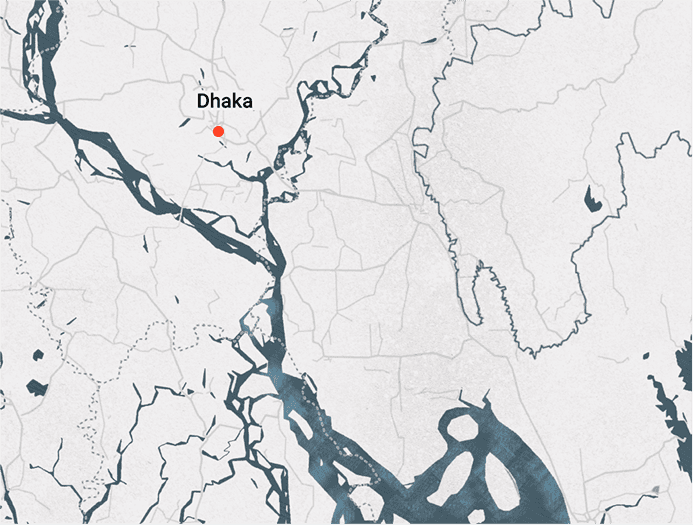
Deltas are sinking due to carbon being released, heat being absorbed, and seas expanding—and we are behind all of it.
Our seas are Earth’s greatest carbon sink—absorbing excessive amounts of heat generated from our industries’ carbon emissions. It is only fair to say that the factors leading to this heat generation are anthropogenic, or human-caused. The industries that serve our needs are accountable for the majority of carbon emissions, or heat-trapping gases, within our atmosphere.
Steel and concrete used in the construction industry currently account for around 11% of global carbon emissions.